Each year, CES Las Vegas stands as a global barometer of technological and industrial innovation. In 2026, the event brought together more than 4,100 exhibitors and welcomed nearly 148,000 unique participants. Over 6,900 journalists and analysts covered the show, highlighting the technologies set to transform industry, mobility, healthcare, and critical systems.
This edition was marked by a slowdown of the traditional “wow effect,” in favor of greater technological maturity and deeper integration into reliable, operational systems. The signals observed offer a strategic reading of the evolution of complex systems, from embedded AI to sustainability, through software and robotics, closely aligned with the challenges faced by the aerospace, energy, rail, healthcare, and defense sectors.
AI moves beyond discourse to become part of systems
Artificial intelligence is no longer an abstract concept: it is now embedded, contextualized, and integrated into real-world systems, often deployed in constrained environments. At CES 2026, AI was demonstrated through several concrete use cases:
- Industry: predictive maintenance solutions deployed close to equipment, continuously analyzing motor vibrations and sensor signals to detect deviations before failures occur.
- Healthcare: patient monitoring systems and AI-assisted diagnostic tools based on image analysis and physiological data, combined with remote monitoring platforms.
- Mobility: energy optimization and perception software for autonomous vehicles, integrating sensors, mapping, and embedded AI, illustrating the convergence between vehicles, urban infrastructure, and cloud systems.
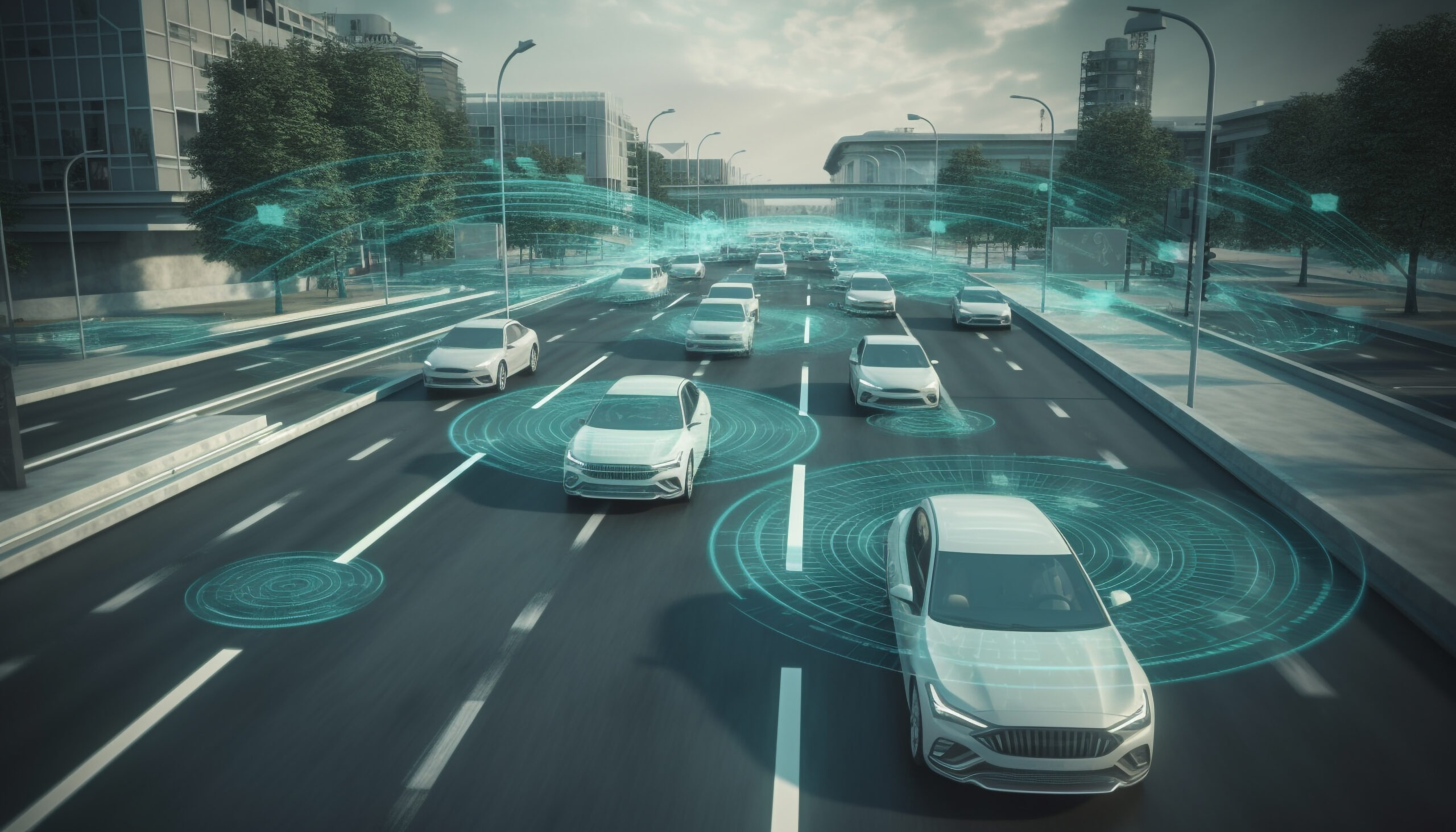
The real challenge no longer lies in isolated demonstrations, but in the robustness, validation, and governance of AI once deployed at scale. For critical systems, rail transport, aerospace, energy, or defense, reliability depends on full control of the entire chain: data quality, model explainability, integration into system architectures, and functional safety.
CES thus confirms that value is not driven solely by algorithms, but by their ability to be certified and integrated throughout the entire system lifecycle.
Robotics and automation: the era of real-world applications
The robotics showcased at CES 2026 clearly illustrates the transition from spectacular prototypes to operational use cases already visible in the field:
- Industry: autonomous mobile robots (AMRs) capable of navigating complex environments and collaborating with human operators, alongside collaborative robots dedicated to repetitive tasks.
- Healthcare: automated transport robots for linen, medication, and consumables, complemented by robotic assistance and rehabilitation devices supporting healthcare professionals.
- Mobility: drones and autonomous vehicles integrated into urban control systems, forming truly intelligent networks.
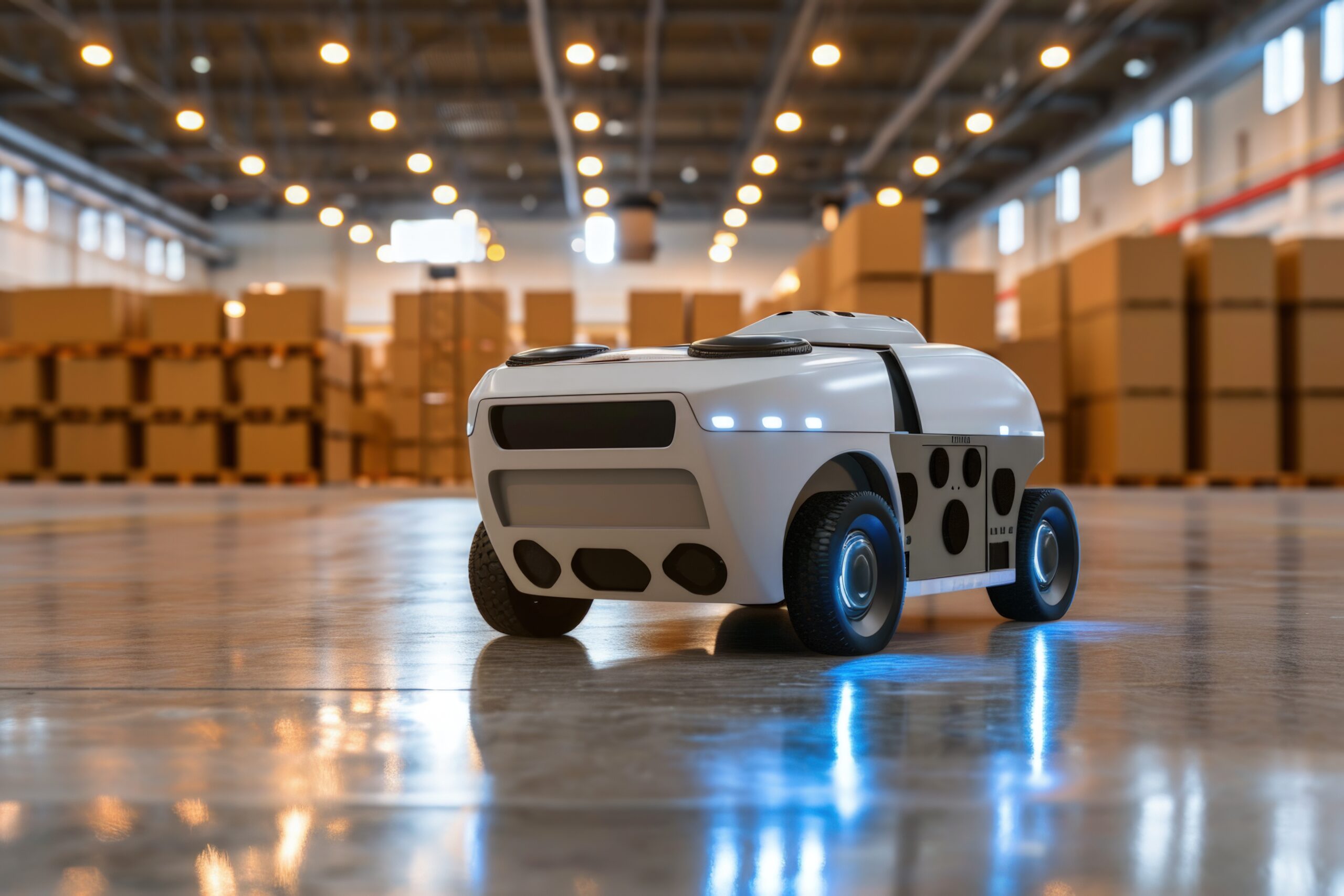
The main challenges identified relate to interoperability and functional safety. These require robust architectures, fine-grained data management, and security considerations embedded from the design phase. The industrialization of robotics now depends on the ability to integrate these technologies into production chains and critical infrastructures, with strong requirements in cybersecurity and real-time performance.
Software at the heart of value creation
CES 2026 confirms that innovation no longer resides solely in hardware. Software now determines the performance and differentiation of complex systems:
- On robotic platforms, comprehensive architectures combine embedded computing, AI libraries, perception, and supervision, enabling a smoother transition from prototypes to deployed fleets.
- In industry, software pipelines process sensor data in real time at the edge, run local machine learning models, and alert supervision systems as soon as anomalies are detected.
- In regulated sectors, cybersecurity and compliance have become entry requirements: encryption, logging, traceability, and system resilience are now core components of proposed solutions.

This shift toward a “software-defined world” accompanies the rise of complex digital and embedded systems. AI, supervision, and regulatory constraints must be integrated in a coherent and robust manner, without compromising safety or performance.
More responsible and more useful technology
Sustainability and efficiency play a central role in many innovations presented at CES 2026:
- Industry: energy management platforms combining sensors, AI, and visualization to reduce consumption while ensuring service continuity.
- Healthcare: connected technologies enabling earlier diagnosis, prevention, and remote monitoring, optimizing both human and material resources.
- Integrated sustainability: repairability, resource optimization, and long-term performance are becoming full-fledged engineering constraints.
Technological systems must now be performant, safe, and sustainable, delivering measurable impact on operations and usage. Responsibility is no longer a marketing argument, but a structuring design criterion.
CES 2026: a reflection of complexity
CES 2026 is not merely a showcase of gadgets. It reveals the complex systems that will need to be mastered to succeed in the future. Embedded AI, operational robotics, critical software, and responsible technologies are no longer isolated trends, but inseparable components of industrial transformation.
This edition confirms the need to combine technical expertise with strategic vision in order to design reliable, high-performance, and sustainable systems, aligned with the industrial and societal challenges ahead.